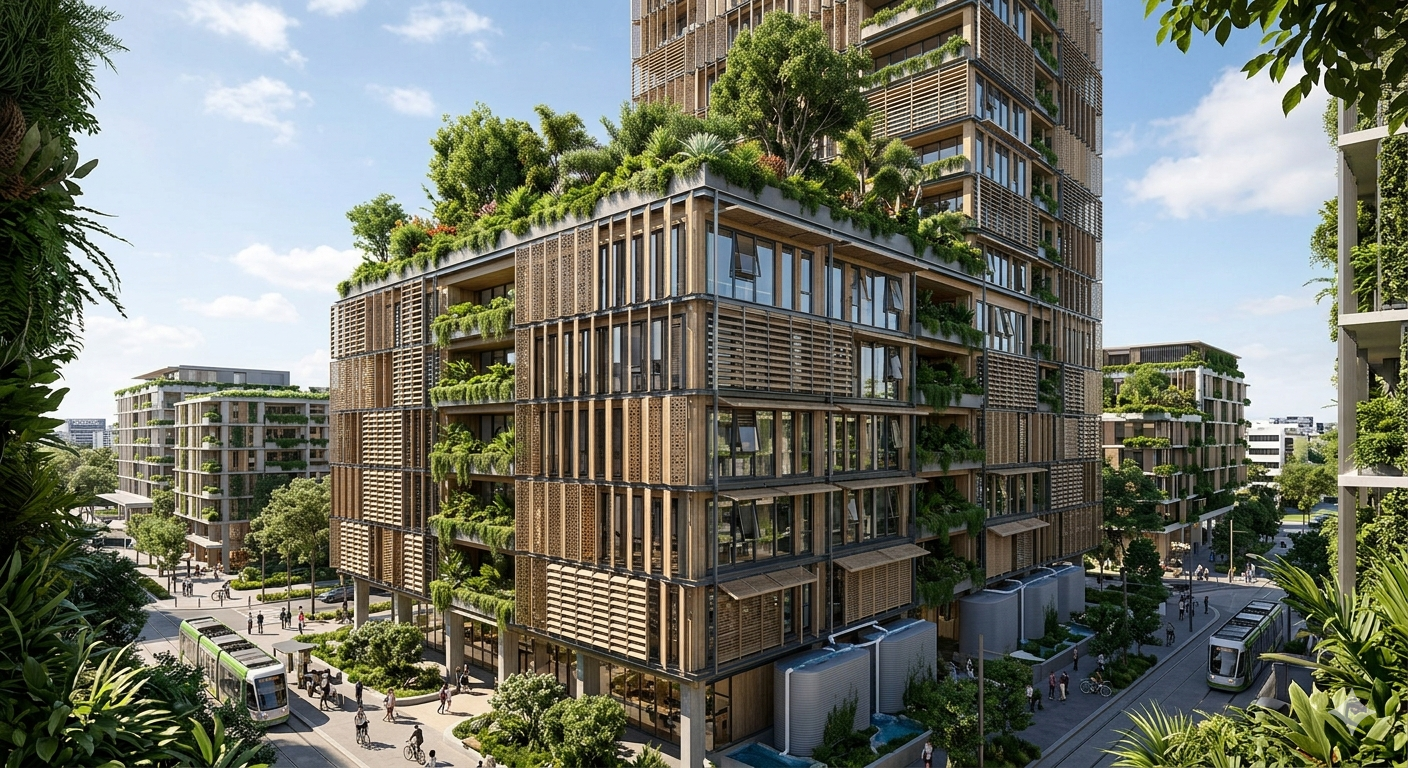
For much of the twentieth century, green space in cities was treated as a pleasant amenity — something to be included when land and budget allowed, and sacrificed when they did not. That view has been comprehensively overturned by a body of research accumulated over the past three decades. Parks, street trees, rooftop gardens, bioswales, and urban forests are not luxuries. They are essential infrastructure, as critical to the health and functioning of a city as its roads, water mains, and power lines — and in the coming decades, as climate change intensifies the stresses on urban environments, they will become more important still.
"Green space is not the opposite of the built environment. It is part of it — and cities that treat it as an afterthought pay a measurable price."
The evidence linking access to urban green space with better physical and mental health outcomes is now substantial. Studies consistently show that people who live within walking distance of parks and green areas have lower rates of anxiety, depression, and stress-related illness than those who do not. The mechanisms are multiple: green space provides opportunities for physical activity; it offers respite from the visual and auditory stimulation of the urban environment; the presence of trees and plants has direct physiological effects, including lower cortisol levels and reduced blood pressure, that are measurable even after brief exposure.
For children specifically, access to green space has been linked to better cognitive development, improved concentration, and reduced rates of attention-deficit disorders. For elderly residents, proximity to parks is associated with higher levels of physical activity and lower rates of social isolation. These are not marginal effects — they represent meaningful improvements in population health that translate into reduced healthcare costs and improved quality of life across entire communities.
Urban heat islands — the phenomenon by which cities are measurably warmer than surrounding rural areas, due to the absorption and re-emission of solar energy by hard surfaces — are a growing problem in rapidly urbanising cities. Tree canopy and vegetated surfaces absorb solar radiation rather than reflecting it, and the evapotranspiration of plants has a significant cooling effect on the surrounding air. Studies of cities in tropical and subtropical climates have found that well-treed streets can be 3–5°C cooler than comparable streets without tree cover — a difference that is the equivalent of several weeks' difference in effective climate, and that translates directly into reduced cooling energy demand and improved outdoor comfort.
Green infrastructure also plays a critical role in urban stormwater management. Hard surfaces — roads, pavements, roofs — create rapid surface runoff that overwhelms drainage systems during heavy rainfall events. Vegetated surfaces, permeable paving, and bioswales absorb rainwater, slow its passage into the drainage network, and filter out pollutants before water reaches watercourses. As rainfall patterns become more extreme under climate change, the value of this green stormwater infrastructure will only increase.
Addis Ababa is growing at a pace that puts enormous pressure on its green spaces. The expansion of formal and informal settlements, the development of road infrastructure, and the intensification of land use across the city have reduced the area of accessible green space per resident over the past two decades. At the same time, the city's altitude and climate make it an environment where urban greening is both highly feasible — the rainfall and growing conditions support a wide range of vegetation — and genuinely impactful in terms of cooling, air quality, and flood management.
For architects and developers in Addis Ababa, incorporating green space into building and site design is not simply a gesture towards sustainability. It is a practical response to the urban environment in which projects sit. Landscaped setbacks, green roofs, courtyard planting, and permeable paving all contribute to a city that is more comfortable, more beautiful, and more resilient — and they are investments that add measurable value to the properties they serve.
← Back to News & Insights