Commercial · Mixed-Use
A mixed-use development anchored by a landmark entrance that announces its presence on the city
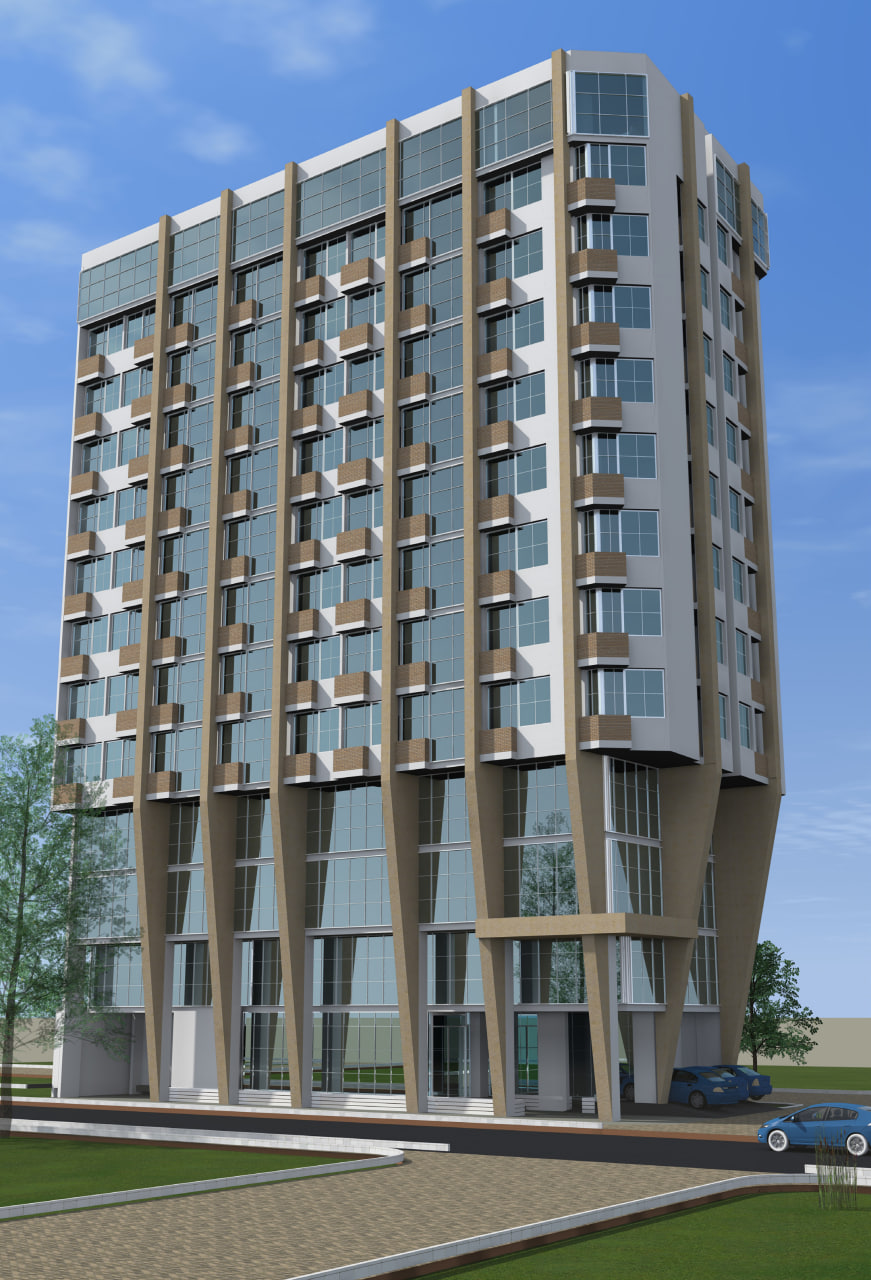
HST Place is a mixed-use commercial and residential development for Encore Real Estate and Consulting Services P.L.C. in Addis Ababa. The project combines apartment units with active ground-floor commercial uses — retail, services, and a prominent corporate reception — within a building that is designed from the outset to establish a clear identity on its street and within its wider urban setting.
The defining design decision for HST Place was the treatment of the entrance sequence. In many mixed-use buildings, the arrival experience is compressed to the minimum required by code — a lobby, a lift core, a postbox room. For HST Place, the client's brief called for an entrance that would function as a genuine landmark: a space that communicates the quality and ambition of the development to passers-by and arriving visitors alike, and that gives residents a daily experience of arrival that reinforces the building's identity.
HGC's response was to develop a double-height entrance pavilion that projects forward from the building's principal facade, creating a covered arrival forecourt and a generous lobby behind it. The pavilion is expressed differently from the residential floors above — its materiality, transparency, and scale mark it as a distinct element within the composition, drawing the eye and signalling the building's primary address from the street. The lobby interior is designed with careful attention to proportions and light, using natural materials and a considered palette of finishes to establish a sense of quality that pervades the building's common areas.
The ground and first floors of HST Place accommodate commercial tenants — retail units of varying sizes, a café, and service uses that create an active and varied street frontage. The programming strategy was developed with the understanding that ground-floor vitality is essential to the long-term success of a mixed-use development: a building whose ground floor is dead generates no footfall, benefits neither the commercial nor the residential tenants, and contributes nothing to the public realm of the surrounding neighbourhood.
The residential apartments begin from the second floor and rise through the upper levels of the building. The transition between the commercial base and the residential floors is carefully managed — a dedicated residents' entrance on the secondary street elevation gives apartment dwellers a direct and private route to the lift core without passing through the commercial lobby, preserving the residential quality while allowing the ground floor commercial areas to function as fully public spaces.
HST Place was designed with an explicit attention to its urban context and to the long-term value of the investment it represents. The building's facade composition is robust and considered — using durable materials, clear geometric order, and a restrained palette that will age well and remain appropriate as the surrounding neighbourhood evolves over the coming decades. The structural system provides genuine flexibility for future adaptation: the commercial floors could be reconfigured for different uses, and the residential floors above are designed with layouts that accommodate a range of occupancy patterns over the building's lifetime.